Strikes Installer Guide
Open the original PDF document
View PDF
An Installer's Guide To Electric Strikes
© 2019 Camden Door Controls

| 2 | ||
|---|---|---|
An Installer's Guide To Electric Strikes
Camden Door Controls is dedicated to your success, and offers technical support through a library of helpful technical documents, such as this electric strike selection guide. In the following pages, we offer important information on how to select an electric strike.
Electric strikes are one of several kinds of electrically operated locking devices used to secure both inside and outside doors. Electro mechanical by nature, they provide a cost-effective way to control foot traffic from one side of a door to the other. The cost of this device can run from $25.00 - $50.00m to several hundred dollars, compared to electromagnetic locks that can cost upwards to $1,500.00 or more when you include all the necessary devices required to comply with local, state, and national fire and building codes.
The task of selecting the right electric strike for specific applications is extremely important because the wrong electric strike will compromise the overall security of the door. "A chain is only as strong as its weakest link," and so the wrong strike can easily become that weak link in an access control system. Using the wrong electric strike also can reduce the life expectancy of the electric strike, causing premature failure.
Another reason for a possible security failure is the physical and mechanical condition of the door due to sagging and misalignment. For this reason it's important to double check the mechanical functions associated with each door where an electric strike is used. If it's a retrofit application, it would be prudent to check the door for such issues before you do the work.
There are nine basic factors that you need to know when matching an application to the correct electric strike. In brief, they are:
- 1. Electric strike mechanics
- 2. Type of door and frame
- 3. Type of mechanical door lock(s)
- 4. Door strike security Grade (1, 2, or 3)
- 5. Supply Voltage (8, 12, 16, 24)
- 6. Electric Strike Duty and Fail States
- 7. Duty (Intermittent Vs. Continuous)
- 8. Strike and Lock Center Alignment
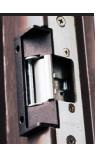
1. Electric Strike Mechanics
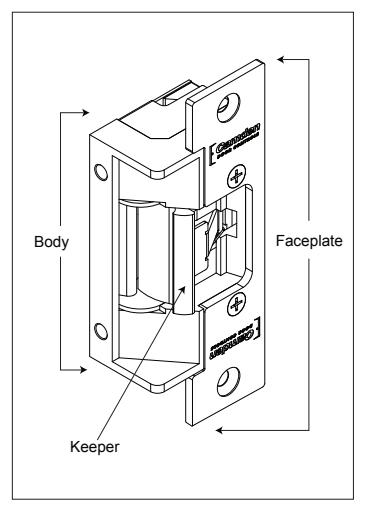
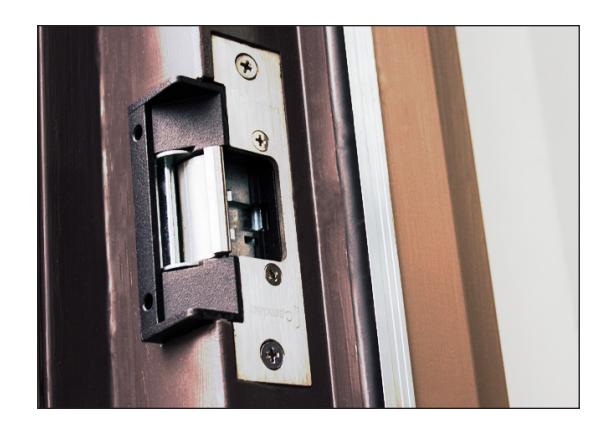
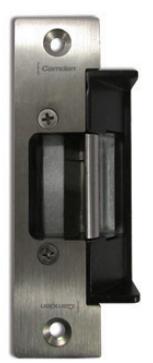
It's important to know the mechanical elements associated with an electric strike in order to select the right model for a customer's application. Electro-mechanical by nature, electric strikes contain a solenoid; a small, movable keeper; and a specially designed strike cavity made to correspond to specific faceplates for specific types of latchbolts, deadbolts, and deadlatches used.
The movable keeper within an electric strike acts as a gate, holding the lockset latch in place until someone energizes or de-energizes the strike's solenoid--depending on what kind of electric strike it is (more about this in a later section). When an authorized action does occur, such as a valid access card presented to a card reader, or someone at a manned kiosk presses a door release button, the electric strike will allow the keeper to move and the door to open.
Some models include an internal means of monitoring the status of the electric strike, such as the door position or the condition of the keeper. This is a handy feature to have because the customer now knows for certain when the door is locked or unlocked. This type of electric strike is commonly employed in applications that require a higher level of security than a common electric strike will provide.
2. Type of Door and Door Frame
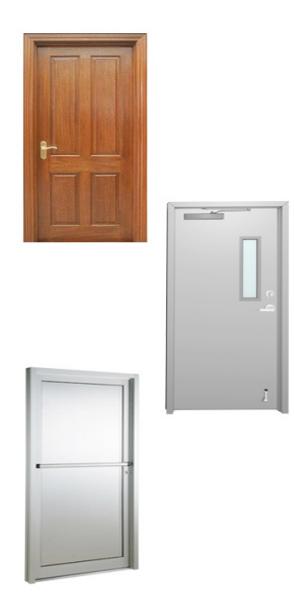
One of many important factors in the selection of an electric strike is the type of door and door frame. This is of great importance in that electric strikes are designed for use with specific kinds of doors and frames, made of specific materials. In all cases, the size and design of the electric strike faceplate is dependent upon the type of door frame material.
For example, there are three basic materials to consider when working with electric strikes. They are 1) wood, 2) hollow metal, and 3) aluminum:
- 1. Wood: Wooden doors typically require electric strikes equipped with a longer face plate than when working with metal. It's a proven fact that a longer face plate promotes additional security and stability.
- 2. Hollow Metal: Hollow metal doors and frames are common in commercial facilities. The problem with hollow metal frames, however, is that they are commonly filled with construction materials, such as concrete and grouting. Frames filled with construction material can pose a number of difficulties when installing an electric strike. For this reason, some electric strike manufacturers, like Camden Door Controls, make a low-profile electric strike where the coil is housed within the strike itself instead of externally.
- 3. Aluminum: Aluminum door frames usually come with a pane of glass. It's important to pay particular attention to the width of the glass versus the door frame to assure that you do not drill into the edge of the glass window. This can cause it to crack. These aluminum frames usually measure between 1-¾ and 2 inches wide.
3

Fire Ratings for Inside and Outside Doors: Outside doors may or may not carry a fire rating. In the past, outside doors did not necessarily have to carry a fire rating. Today, however. this is not always the case due to the advancement of local fire codes. Thus, the bottom line is to match the electric strike to the fire rating of the door. This is especially critical on the inside of a building where you're sure to encounter several fire walls with doors that must be capable of withstanding the heat of a fire for a given period of time.
Important Note: Fire rated electric strikes must be fail secure.
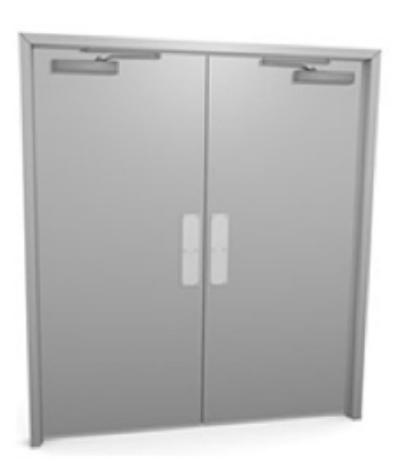
Single Versus Double Doors: Another important item to consider is whether the door opening you're working with is comprised of one or two doors. In the case of a double door, you need to know if there is a center mullion present and whether it can be removed. When a center mullion is used, an electric strike can be installed within it. When there is no center mullion present, however, the electric strike can be installed inside of the inactive door. If both doors are active, another method of locking may be required, such as an electromagnetic lock (EML). All of these issues can affect the type of electric strike you use so be sure to do your homework ahead of time.
3. Type of Mechanical Door Lock(s)
The type of lock on a door figures heavily in the electric strike selection process. It's imperative that you know this information before you make a final decision on the electric strike you will select. There are a number of common door locks that you'll encounter when installing most electric strikes. They are:
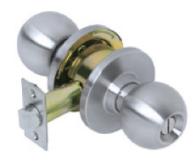
Cylindrical Locks: When dealing with an existing door with a cylindrical lock(s), it's important that you know what kind of locking arrangement you're working with. Think of it this way, if you take the electrical power issue out of the picture, the electric strike must perform the same function in the same manner as the original strike plate. This requires that that the latchbolt of the lock and the center line of the electric strike be aligned.
In order to make the right decision, it's important to know what type of cylindrical lock that you are working with. There are three basic types that you'll encounter. Each one is different in how it secures the door and so figures heavily in the kind of electric strike you need.
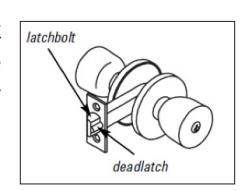
They are:
- Latchbolt: The latchbolt is a spring-loaded assembly that ramps toward the inside of the door. This ramping effect enables the latchbolt to move inward when closing the door. When the latchbolt is even with the strike plate/electric strike's inner cavity, it is free to pop out into this space to secure the door.
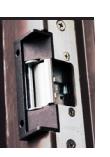
- Deadlatch: The deadlatch is designed to work with the latchbolt so that when locked, the deadlatch remains depressed in the lockset. This assures that the latch cannot be manipulated from outside the door.
- Deadbolt: The deadbolt contains a latchbolt that the user manually extends into the strike plate to secure a door. In the same manner, the user must manually retract the deadbolt in order to unlock the door. This type of lock requires a special electric strike, designed with additional depth and, in some instances, a slightly different type of keeper.
Mortise Locks: Choosing an electric strike for use with a mortise lock requires an understanding of the mechanical locking aspects of the lock itself and how each one works with a multi-faceted strike plate.
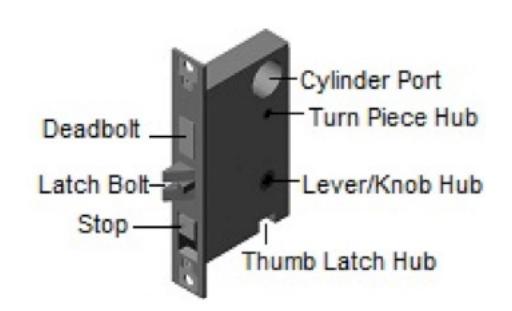
The dimensions of most, if not all mortise locks are the same because of ANSI standards. However, not all lock manufacturers arrange the latchbolt, deadlatch, and other elements in the same manner. For this reason, there are manufacturers, such as Camden Door Controls, that provides a selection of faceplates to accommodate the various mortise lock products on the market.
For example, like its cylindrical counterpart, some mortise locks contain a deadlatch that must depress and remain so when the door is shut and the lockset is in a locked state. It's essential that the right faceplate be used in order to maintain the deadlatch in its intended depressed state. Otherwise the latchbolt can be manipulated allowing the door to open. All manufacturers provide a listing of compatible mortise locksets for each of their mortise electric strikes. Installers must reference these guides in all cases.
Rim Locks: The Rim lock is an externally mounted exit/panic locking mechanism installed on the inside surface of a door. It locks using a surface mounted strike assembly, either on the outside of the frame or on the inside edge of the same. Things to watch for here include depth of the cavity within the electric strike as well as the center strike plate/latchbolt alignment (more on this in the next section).
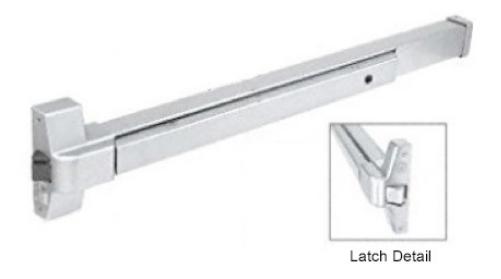
Knowing which one of the above three locks that you're dealing with is important. Electric strikes are engineered with specific locks, doors, and construction materials in mind. It's important to your success that you know as much about these items so your success is assured.
Horizontal Strike Adjustments: A common issue can arise with regard to alignment of the strike and a door lock, due to door warp or door misalignment. To overcome this, some strikes provide horizontal adjustment by providing a movable keeper, capable of providing an horizontal adjustment of up to 1/4 inch.
Another method of horizontal adjustment is with the faceplate itself. In this case the strike is designed with faceplate mounting screws that allow the faceplate to be moved as much as 3/8 inch horizontally across the strike body.
4. Electric Strike Security Grade (1, 2, or 3)
Like the locking hardware we install on doors of all kinds, electric strikes are rated in the same manner using a grading system. The three grades that we use come from a standard created and published by ANSI.

"The American National Standards Institute (ANSI) is a private nonprofit that administers voluntary performance standards for builder's hardware. The purpose of ANSI grades is to help identify the quality and durability of locksets through a series of operational and security tests" (Schlage, an Alligion company, http://bit.ly/1MJ996c)
These three grades are:
Grade 1: Used in commercial installations, Grade 1 offers the best security.
Grade 2: Used in commercial and high-end residential applications, Grade 2 is used where the need for security is not as high as Grade 1.
Grade 3: Used in commercial applications on interior doors and residential applications, Grade 3 is used where robust security is not required.
ANSI specializes in the creation and publication of voluntary performance standards for the hardware that builders utilize. The purpose of the ANSI grading system is to assist locksmiths, builders, and consumers in identifying the quality and durability of the locking devices they use. This grading system, which includes both locksets and electric strikes, was determined through a series of tests to determine operability and security.

According to BHMA/ANSI standards, there are three factors that enter into which of the three Grades that a lock or electric locking device fits. They are 1) cycle testing, 2) dynamic force, and 3) static strength.
Cycle testing, which is an indication of endurance, is performed with similar hardware at a rate of up to 30 cycles per second. To qualify as Grade 1, an electric strike must be capable of at least 1,000,000 cycles; Grade 2, 500,000; and Grade 3, 250,000.
Dynamic strength is tested by delivering a specified number of impacts using a ram at a specific spot on a door at specified increments. Grade 1 electric strikes must be capable of withstanding 10 strikes of 75 pounds of force (150 foot-pounds). Grade 2, 5 strikes of 75 pounds of force (120 foot-pounds). Grade 3, 2 strikes of 75 pounds of force (90 foot-pounds). You can see why Grade 1 is considered the best.
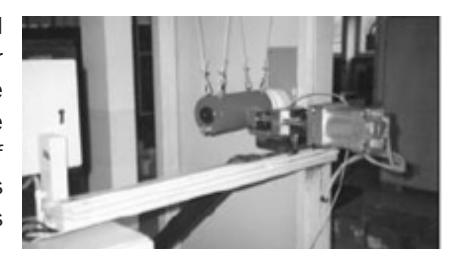
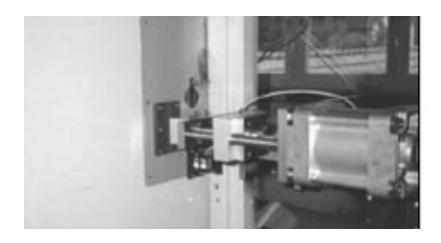
Static holding power is another indication of quality, Testing, which is done with the electric strike in a locked condition, begins with the application of a specified amount of force to the door on a continuous basis at a rate of 10 to 20 pounds-force (44N to 90N) per second. This is performed until the hardware's rated static strength is reached. Then the force is applied for another minute before it's removed.
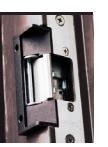
It's important that you know the Grade of the locking hardware on the door in question. The electric strikes you install should match or exceed the locking hardware on the door. Remember, a chain is only as strong as its weakest link.
5. Supply Voltage (8, 12, 16, 24)
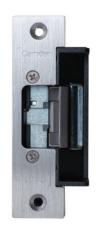
The most common voltages used with electric strikes include 12 VDC, 24 VDC, 12 VAC, 16 VAC, and 24 VAC. In retrofit situations, it's important that you know which one is in use because the wrong voltage could easily damage the electric strike or the power supply that it's connected to. Where the existing electric strike fails to show a voltage rating, or where the strike is missing, you should apply a voltmeter to determine the voltage employed.
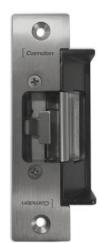
The use of 16 VAC is common in low-security, Grade 3, wood-type applications. Apartment intercom systems and inside entrances are common applications where you'll find this type of electric strike. Because it's an AC-powered device, the electric latch will buzz when activated.
The down side to an AC-operated electric strike occurs that during a power outage. The power to the lock will fail locked. Depending on whether the strike is used in "fail-safe" or "failsecure" mode, the door could unlock or lock (more about this in Section 7, "Duty,") respectively.
The most common voltages used by professionals are 12 VDC and 24 VDC. The most efficient selection, however, is 24 VDC. This is because an electric strike using 24 VDC will expend less current than those that use 12 VDC. For example, the Camden model CX-ED1079DL– a traditional Grade 1 electric strike at standard depth--requires 300 mA @ 12 VDC or 150 mA @ 24 VDC. Less current flow using 24 VDC (150 mA) allows us to travel twice as far on the same gauge wire as 12 VDC (300 mA).
Universal electric strikes are available that are field-selectable in voltage and duty, such as 12 VDC or 24 VDC as well as fail-secure/intermittent or fail-safe/continuous duty specifications. Refer to the manufacturer's installation instructions for further advice on wire gauges versus linear distances.
6. Electric Strike Fail States
One of the most important aspects of selecting an electric strike involves the various effects of power on the electric strike. The first is the "Fail State."
There are two "Fail" states:
- 1. Fail Safe Unlocked
- 2. Fail Secure Locked
"Fail-Safe" electric strikes, for example, will unlock a door when power is removed. On the other hand, "Fail-Secure" electric strikes will lock the door when electric power is lost, as when there's a power failure.
Many times a fail-secure electric strike is associated with the intermittent application of electric power while continuous-duty is associated with fail-safe electric strikes. Fire code requires that fail-secure electric strikes
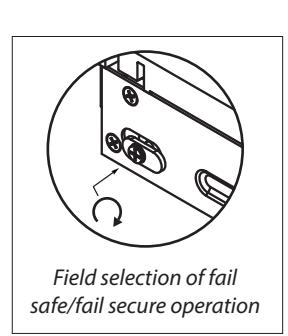
be installed and maintained on critical fire-rated doors so the moment power is lost, the keeper in the electric strike latches, thus preventing the door from opening and allowing fresh oxygen to feed the fire.
Maintaining a latched keeper during fire situations when power fails also is intended to assure the isolation of one area/room from others. Air pressure increases in the area of a fire and unless these doors are kept closed, smoke, heat, and fire will spread to adjacent areas of the structure, thus jeopardizing lives.
7. Duty (Intermittent Vs. Continuous)
One of the most important aspects of selecting an electric strike involves the "duty" rating. The duty rating of an electric strike establishes its basic operating parameters--such as whether voltage can be continually applied or applied intermittently only as needed. There are two basic duty ratings assigned to electric strikes. They are:
- 1. Intermittent
- 2. Continuous
In most, if not all access control situations an intermittent-duty electric strike requires that voltage be applied to unlock the door. This means that when the electric strike is de-energized, the door is locked. In this case the mechanical "keeper" inside the electric strike remains in its latched state. By applying power, the "keeper" is unlatched by a solenoid assembly, thus allowing it to move aside when the door is pushed or pulled open.
Continuous-duty electric strikes are different in that the keeper is unlatched and free to move in its de-energized state. When power is applied, the keeper mechanically latches so the door is once again in its locked condition.
An intermittent-duty electric strike is also referred to as "fail-secure" while a continuous-duty is referred to as "fail-safe." Fire code requires that fail-secure electric strikes be installed and maintained on critical fire-rated doors so the moment power is lost, the keeper in the electric strike latches, thus preventing the door from opening.
Maintaining a latched keeper during fire situations when power fails is meant to assure the isolation of one area/room from others. Air pressure increases in the area of a fire and unless these doors are kept closed, smoke, heat, and fire will spread to adjacent areas of the structure, thus jeopardizing the lives of others.
8. Strike and Lock Center Alignment
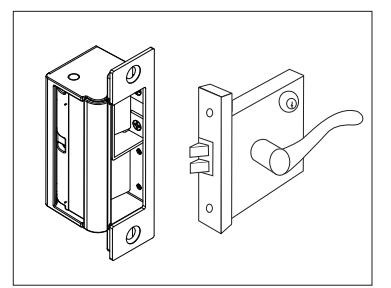
Alignment of the keeper in the electric strike and the latch of the lock on the door must be in agreement in order for the two to work together. In the case of a cylindrical lock, alignment is fairly straight forward and easy to see as the latch is center to the lock body. In the case of a mortise lock, however, alignment is less obvious as the latch and other elements of the lock can be 3/8th of an inch off center.
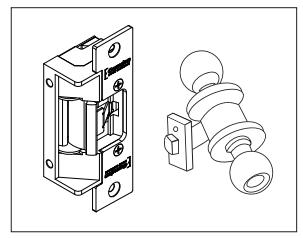
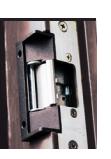
In the case of a mortise lock the deadlatch and a solid area of the electric strike must align as well as the latch and the open portion behind the keeper in order for the deadlatch to do its job. That job is to prevent someone from forcing the latch to move, thus allowing the door to open.
The deadlatch on a cylindrical lock can usually be found on the backside of the latch. Here, once again, position is important because the keeper is that which contacts the deadlatch while the latch itself remains intact in the open cavity of the electric strike.
Electric Strike Catalog Listings
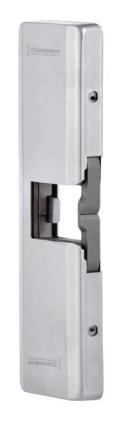
CX-ED1259L: SURFACE MOUNT FIRE RATED RIM ELECTRIC STRIKE
Camden's CX-ED1259L is a Grade 1 surface mount RIM strike that accommodates 1/2" to 3/4" latch projection and is a 'universal' design with 12/24V, AC/DC, operation, and selectable fail safe/fail secure operation. The CX-ED1259L includes (2) spacer plates, and has horizontal adjustment to insure correct latch alignment.
Features
- 'No Cut' surface mounted
- 'Universal' design with selectable 12/24V, AC/DC and fail safe/fail secure operation
- Single solenoid design provides superior strike reliability
- Tamper resistant stainless steel construction
- (2) spacer plates and horizontal adjustment insure proper latch entry in all applications
- • 1/2" to 3/4" latch projection
- • Latch monitoring included
- • Non-handed, plug-in wiring harness
- • 5 year warranty
| MODEL | |
|---|---|
| CX-ED1259L |
Surface mount Grade 1 RIM electric strike, UL 1034 Burglary Listed, 12/24V,
AC/DC, fail safe/fail secure operation, c/w latch monitoring and (2) spacer plates |

UL 1034 UL 294
| Voltage: | 12/24V AC/DC |
| Current Draw: |
280mA@12V AC/DC
140mA@24V AC/DC |
| Static Strength: | 1,500 Lbs. |
| Dynamic Strength: | 70 Ft- Lbs. |
| Endurance: |
1,000,000 cycles
(factory tested), 250,000 cycles (UL verified) |
| Fire Rating: |
UL10C/CAN4-S104
3 hrs. (Fail Secure Only) |
| Mode: |
Selectable fail safe
fail secure |
| Operation: |
AC - Buzz
DC- Silent |
| Duty: | Continuous |
| Latch Monitor: | Yes |
| Dimensions: |
9"H x 1 3/4"W x 1/2" D
(230mm x 44.5mm x 13mm) |
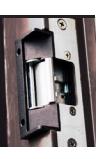
CX-ED1579L: 'ALL IN ONE' FIRE RATED ELECTRIC STRIKE
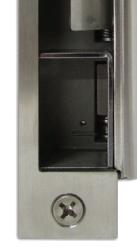
Camden CX-ED1579L Grade 1 electric strike for mortise and cylindrical locksets offers the very best strike quality and features, with the added value of built-in latch monitoring, five stainless steel faceplates and 'Universal' performance, including field selectable voltage and fail safe/fail secure operation.
Features
- For mortise and cylindrical locksets
- 3/4" (19mm) latch projection (throw)
- Selectable fail safe/fail secure operation
- • Selectable 12/24V AC/DC
- • Non-handed, LH/RH
- • 5 Stainless Steel faceplates included
- Easy fit connectors for power and monitoring wires
- • Latch monitoring
- • Stainless steel strike body
- • 5 year warranty
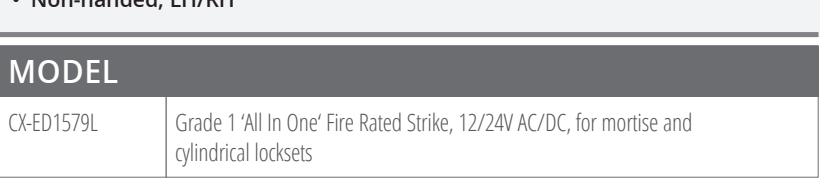
| FACEPLATES | ||
|---|---|---|
| Included in the package | ||
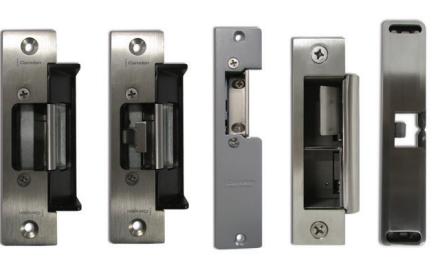
| CX-EMP-1 | Stainless faceplate for Sargent, Schlage & Yale Mortise Locksets | |
| CX-EMP-2 | Stainless faceplate for Arrow, Corbin, & Best mortise locksets | |
| CX-EMP-3 | Stainless faceplate for centerline mortise or cylindrical locksets | |
| CX-EMP-4 | Stainless faceplate for mortise locksets with deadbolt | |
| CX-EMP-5 | Stainless faceplate for all mortise locks that include both latch & deadbolt | |
| CUTTING JIG | |
|---|---|
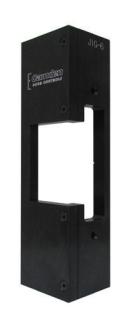
| CX-JIG6 | For CX-ED1579L Strike, ANSI Face Plate (CX-EMP-3) |
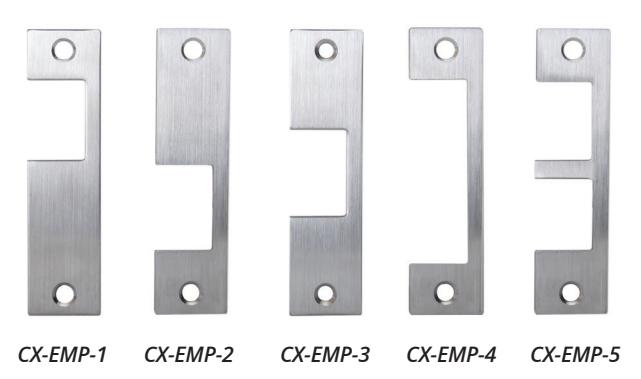
Stainless Steel Faceplates

UL 1034 UL 294
Specifications
| Voltage: | 12/24V AC/DC |
|---|---|
| Current Draw: |
260mA @ 12V AC/DC
150mA @ 24V AC/DC |
| Static Force: | 1,500 Lbs. |
| Dynamic Force: | 70 FT- Lbs. |
| Mode: |
Fail-safe/Fail-secure
Field selectable |
| Operation: |
AC - Buzz
DC - Silent |
| Duty: | Continuous (DC) |
| Mounting: | Non-Handed |
| Endurance: |
1,500,000 Cycles
(Factory Tested) 250,000 Cycles (UL Verified) |
| Fire Rating: |
UL10C/CAN4-S104
3 hrs. (Fail Secure Only) |
| Latch Bolt Monitor: SPDT, 100mA @ 24V DC | |
| Dimensions: |
Body:
4 7/8"H x 1 1/4"W x 1 3/4"D (124mm x 32mm x 45mm) |
CX-JIG6
CX-ED1079 SERIES: 'UNIVERSAL' LOW & STANDARD PROFILE GRADE 1 ELECTRIC STRIKES
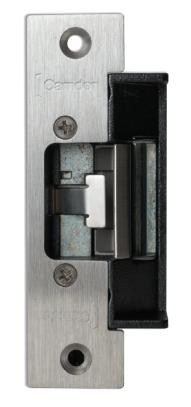
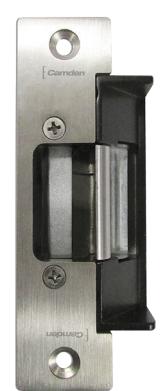
The CX-ED1079 (low profile, for 5/8" latch projection) and CX-ED1079D (standard depth, for 3/4" latch projection) 'Universal' grade 1 ANSI strikes offer 'Universal' performance with selectable 12/24V AC/DC and fail safe/fail secure operation, and have horizontal faceplate/body adjustment. Both models have optional latch monitoring.
UL 1034 UL 294

- Centerline latch entry for cylindrical and mortise locksets
- CX-ED1079, low profile. 1/2" to 5/8" latch projection (throw)
- CX-ED1079D, standard depth. 5/8" to 3/4" latch projection (throw)
- Selectable 12/24V AC/DC
- Selectable fail safe/fail secure operation
- Horizontal adjustability of strike faceplate/body
- 3 stainless steel faceplates included: ANSI square, hollow metal and wood door frame
- Continuous duty operation
- Non-handed
- 5 year warranty
| MODELS | |
|---|---|
| CX-ED1079 | Low Profile Grade 1 'Universal' electric strike, 12/24V AC/DC, fail safe/fail secure operation, horizontal adjustment, and 3 stainless steel faceplates (CX-ESP1B, CX-ESP3B & CX-ESP4B) |
| CX-ED1079L | As above, with latch monitoring |
| CX-ED1079D | Standard Depth Grade 1 'Universal' electric strike, 12/24V AC/DC, fail safe/fail secure operation, horizontal adjustment, and 3 stainless steel faceplates (CX-ESP1B, CX-ESP3B & CX-ESP4B) |
| CX-ED1079DL | As above, with latch monitoring |
| FACEPLATES | ||
|---|---|---|
| Included in the package | ||
|
CX-ESP1B
CX-ESP3B CX-ESP4B |
ANSI Square, 4 7/8" x 1 1/4", stainless steel
Hollow Metal Door, 6 7/8" x 1 1/4", stainless steel Wood Door, 7 15/16" x 1 7/16", stainless steel |
|
| Additional faceplate | ||
| CX-ESP2B | ANSI Round, 47/8" x 1 1/4", stainless steel | |
| LIP EXTENSION BRACKETS | ||
|---|---|---|
| 1" Lip extension for ANSI strikes (Stackable) 2" Lip extension for ANSI strikes | ||
| CUTTING JIGS | |
|---|---|
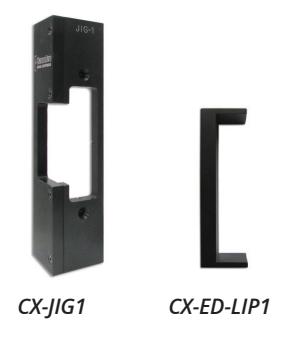
| CX-JIG1 | For CX-ED1079L Strike, ANSI Round faceplate (CX-ESP2B) |
| CX-JIG2 | For CX-ED1079L Strike, Hollow metal door faceplates (CX-ESP3B) |
| CX-JIG3 | For CX-ED1079DL Strike, ANSI Round faceplates (CX-ESP2B) |
| CX-JIG4 | For CX-ED1079DL Strike, Hollow metal door faceplates (CX-ESP3B) |
| CX-JIG5 | For CX-ED1079L & CX-ED1079DL Strikes, ANSI & Hollow metal door faceplates |
| Voltage: | 12/24V AC/DC |
| Current Draw: |
260mA @ 12V AC/DC
150mA @ 24V AC/DC |
| Static Strength: | 1,500 Lbs. |
| Dynamic Strength: | 70 FT- Lbs. |
| Mode: |
Selectable Fail safe/
Fail-secure |
| Endurance: |
1,000,000 Cycles
(Factory Tested) 250,000 Cycles (UL Verified) |
| Operation: |
AC - Buzz
DC - Silent |
| Duty: | Continuous |
| Latch Monitor: | SDPT, 100mA @ 24V DC |
| Dimensions: |
CX-ED1079:
3 3/8"H x 1 3/4"W x 1 7/32"D (86mm x 44mm x 31mm) CX-ED1079D: 3 3/8"H x 1 3/4"W x 1 3/8"D (86mm x 44mm x 35mm) |
CX-ED1410: 'ANSI' GRADE 1 FIRE RATED ELECTRIC STRIKE
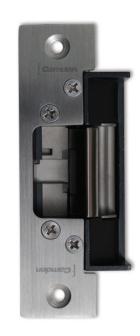
CX-ED1410 Grade 1 ANSI fire strike for UL fire rated doors/frames with cylindrical locksets offers the very best electric strike quality and performance. This 'ANSI' strike is designed to deliver unparalleled application flexibility, with field selectable voltage and fail safe/fail secure operation, over many years of trouble free service.
Features
- Centerline latch entry for cylindrical locksets
- UL/ULC 90 minute fire rated
- • UL 1034 Burglary listed
- 5/8"- 3/4" (16mm 19 mm) latch projection
- • Dual voltage 12/24V AC/DC
- • Trim plate included
- Field selectable fail safe/fail secure operation. Note: Fire rating applicable only while in fail secure mode
- ANSI square faceplate included 4 7/8" x 1 1/4" (124mm x 32mm)
- 5 year warranty
MODEL CX-ED1410 Grade 1 'ANSI' fire electric strike, 12/24V AC/DC, fail safe/fail secure operation
| CUTTING JIGS | |
|---|---|
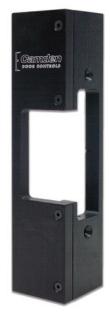
| CX-JIG3 | For CX-ED1410 Strike, ANSI Round faceplates (CX-ESP2B) |

UL 1034 UL 294
| Voltage: | 12/24V AC/DC |
| Current Draw: | 260mA@12V AC/DC |
| 150mA@24V AC/DC | |
| Static Hold Force: | 1,500 Lbs. |
| Dynamic Strength: | 70 FT- Lbs. |
| Endurance: | 1,000,000 Cycles |
| (Factory Tested) | |
|
250,000 Cycles
(UL verified) |
|
| Fire Rating: | 90 minutes (UL Verified) |
| Mode: |
Field Selectable Fail Safe/
Fail Secure (Fire Rated in Fail Secure |
| Mode Only) | |
| Latch projection: | 5/8" - 3/4" |
| (16mm - 19mm) | |
| Operation: | AC– Buzz |
| DC – Silent | |
| Duty: | Continuous |
| Dimensions |
Body:
3 3/8"H x 1 7/8"W x 1 3/8"D (86mm x 47mm x 35mm) |
CX-JIG3
CX-ED2071/ED2079: 'UNIVERSAL' LOW PROFILE GRADE 2 ELECTRIC STRIKES
Camden's CX-ED2079 low profile 'Universal' grade 2 ANSI electric strike for cylindrical locksets provides exceptional value with 3 faceplates, and selectable 12/24V AC/DC voltage, fail safe/fail secure operation and horizontal adjustment of the strike body.
Camden's new CX-ED2071 low profile grade 2 ANSI electric strike for cylindrical locksets provides exceptional value for installations that require 8 - 16V AC/DC operation. CX-ED2071 includes 3 faceplates, selectable fail safe/fail secure operation and horizontal adjustment of the strike body.
Camden CX-ED2079-1 Low profile 'Universal' grade 2 ANSI strike for cylindrical locksets, with (1) ANSI square faceplate, provides the best strike value.
Features
- Centerline latch entry for cylindrical locksets, 1/2" to 5/8" latch projection
- · Horizontal adjustability of strike body
- · Low profile strike body
- CX-ED2079: 12/24V Strike c/w 3 Stainless Steel Faceplates ANSI Square, Hollow Metal Door and Wood Door
- CX-ED2079-1: 12/24V Strike c/w 1 Stainless Steel Faceplate ANSI Square
- CX-ED2071: 8V 16V Strike c/w 3 Stainless Steel Faceplates ANSI Square, Hollow Metal Door and Wood Door
- Selectable fail safe/fail secure
- 5 year warranty
| MODELS | |
|---|---|
| CX-ED2071 |
'Universal' electric strike, 8 - 16V AC/DC, fail safe/fail secure operation,
horizontal adjustment, c/w 3 stainless steel faceplates (CX-ESP1B, ESP3B & ESP4B) |
| CX-ED2079* |
'Universal' electric strike, 12/24V AC/DC, fail safe/fail secure operation,
horizontal adjustment, c/w 3 stainless steel faceplates (CX-ESP1B, ESP3B & ESP4B) |
| CX-ED2079-1* |
'Universal' electric strike, 12/24V, AC/DC, fail safe/fail secure operation,
horizontal adjustment, c/w 1 stainless steel faceplate (EX-ESP1B) |
| FACEPLATE OPTIONS | ||||
|---|---|---|---|---|
| Included in the package | ||||
|
CX-ESP1B
CX-ESP3B CX-ESP4B |
ANSI Square, 4 7/8" x 1 1/4", stainless steel
Hollow Metal Door, 6 7/8" x 1 1/4", stainless steel Wood Door, 7 15/16" x 1 7/16", stainless steel |
|||
| Additional faceplate | ||||
| CX-ESP2B | ANSI Round, 47/8" x 11/4", stainless steel | |||
| LIPEXIENS | SION BRACKETS |
|---|---|
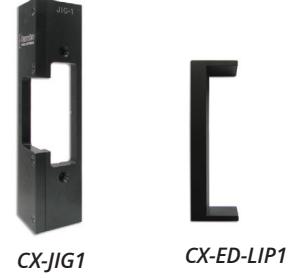
| CX-ED-LIP1 | 1" Lip extension for ANSI strikes (Stackable) |
| CX-ED-LIP2 | 2" Lip extension for ANSI strikes |
LID EVTENCION DDACKETC
CUTTING JIGS
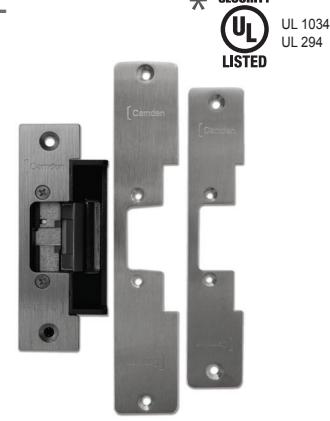
| CX-JIG1 | For CX-ED2079 Strike, ANSI Round faceplate (CX-ESP2B) |
|---|---|
| CX-JIG2 | For CX-ED2079L Strike, Hollow metal door faceplates (CX-ESP3B) |
| Voltage: |
CX-ED2071:
8 - 16V, AC/DC CX-ED2079: 12/24V, AC/DC |
|---|---|
| Current Draw: |
CX-ED2071:
305mA@8VDC, 625ma@16VDC 190mA@8VAC, 460mA@16VAC CX-ED2079: 300mA @12VDC,150mA@24VDC |
| Static Strength: | 1000 Lbs. |
| Dynamic Strength: | 50 Ft. Lbs. |
| Mode: |
Selectable fail safe/
fail secure |
| Endurance: |
CX-ED2071 & CX-ED2079:
700,000 cycles CX-ED2079: 250,000 cycles (UL Verified) |
| Operation: |
AC - Buzz
DC- Silent |
| Duty: | CX-ED2071: Intermittent CX-ED2079: Continuous |
| Mounting: | Non-handed |
| Dimensions: |
3 3/8"H x 1 7/8"W x 1 7/32"D
(86mm x 44mm x 31mm) |
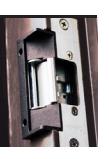
SERIES 20: PRE LOAD ELECTRIC STRIKES
20 Series pre-load electric strikes offer the highest pre-load rating, precision engineered quality and the most adjustability of any strike in the industry. 'Universal' operation include 12/24V, AC or DC, selectable fail safe/fail secure, an adjustable keeper and latch monitoring.
Features
- • For cylindrical locksets
- 1/2" to 5/8" latch projection (throw)
- Pre load feature eliminates binding due to pressure against door latch
- Latch monitoring, standard on all models
- Selection of 4 faceplates
- • Adjustable keeper, standard on all models
- • Dual voltage, 12/24V AC/DC
- Selectable fail safe/fail secure
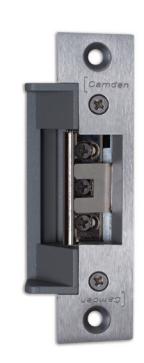
Specifications
| • 5 year warranty | Voltage: | 12/24V AC/DC | ||
|---|---|---|---|---|
| Current Draw: |
130mA@12V DC
200mA@12V AC 70mA@24V AC/DC |
|||
| Static Strength: | 1,500 Lbs. | |||
|
Pre-Load
(Fail Secure Only): |
20 Lbs. | |||
| Endurance: | 500,000 Cycles | |||
| Operation: | Initial Buzz then Silent | |||
| Duty: | Continuous | |||
| Latch Monitor: | Standard | |||
| Keeper: | Adjustable | |||
| Dimensions: |
4 1/8"H x 1 3/4"W x 1 1/2"D
(105mm x 44mm x 38mm) |
|||
ELECTRIC STRIKES WITHOUT FACEPLATE
CX-EPD-2000L Standard body, no faceplate
NOTE: Faceplates options, sold separately
ELECTRIC STRIKES WITH FACEPLATE
| CX-EPD-2010L | ANSI Square, 4 7/8 x 1 1/4" |
|---|---|
| CX-EPD-2020L | ANSI Round 4 7/8 x 1 1/4" |
| CX-EPD-2030L | Hollow Metal Door 6 7/8 x 1 1/4" |
| CX-EPD-2040L | Wood Door 7 15/16 x 1 7/16" |
FACEPLATES
| CX-ESP1 | ANSI Square, 4 7/8" x 1 1/4", stainless steel |
| CX-ESP2 | ANSI Round, 4 7/8" x 1 1/4" , stainless steel |
| CX-ESP3 | Hollow Metal Door, 6 7/8" x 1 1/4", stainless steel |
| CX-ESP4 | Wood Door, 7 15/16" x 1 7/16" , stainless steel |
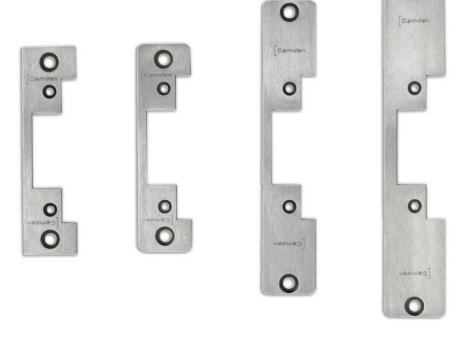
CX-ESP-1 CX-ESP-2 CX-ESP-3 CX-ESP-4
Stainless Steel Faceplates
SERIES 09: GLASS DOOR STRIKES
Camden 09 Series are designed for use on single swing glass doors, 1/2" (12.7mm) thick. There are 12 and 24 VDC, fail secure models. All glass door strikes are reversible for left and right handed doors and can be installed at the top or side of the door.
Features
- Continuous duty operation
- 5 year warranty
- Fully reversible for right or left hand doors
| ELECTRIC STRIKES WITH FACEPLATE | ||||||
|---|---|---|---|---|---|---|
| CX-EL0955 | Electric strike for glass doors, 12 VDC, Fail Secure | |||||
| CX-EL0958 | Electric strike for glass doors, 24 VDC, Fail Secure | |||||
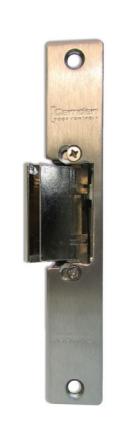
| 12 or 24 VDC Models |
| 561 Lbs. (254 Kg.) |
| 200,000 cycles |
| Continuous duty operation |
|
5°F to 104°F
(-15°C to 40°C) |
|
4 1/8"H x 3/4"W x 1 7/32"D
(105 mm x 20 mm x 31 mm) |
Cross Reference
| DESCRIPTION | CAMDEN |
RUTHERFORD
CONTROLS |
H.E.S. | ADAMS RITE | TRINE | LOCKNETICS | NOTES |
|
Cylindrical,
Grade 1, Low Profile |
CX-ED1079
Series |
L65U | 5000C | N/A | N/A | CS-450-LBM |
Camden includes
3 faceplates Add 'L' Suffix for Latch Monitrong |
|
Cylindrical,
Grade 1, Standard Depth |
CX-ED1079D
Series |
S65U | 5200C | N/A | N/A | CS-750-LBM |
Camden includes
3 faceplates Add 'L' Suffix for Latch Monitrong |
|
Cylindrical,
Grade 2, Low Profile |
CX-ED2079 | L65U | N/A | 7100/7101 | 4200 | CS-450 |
Camden includes
3 faceplates |
|
Cylindrical,
Fire Rated |
CX-ED1410 | F4114 | 7501 | 7270 | 4100 | N/A |
Camden includes
1 faceplate (ANSI with square corners) as standard |
|
Pre-Load
Cylindrical |
CX-EPD2000
Series |
N/A | 7000C | N/A | N/A | ||
|
Rim Strike,
Surface Mount |
CX-ED1259L | 0563 | 9600 | 74R1 | N/A |
RS-200-F or
RS-300-F |
Security and fire rated |
|
"All in One" Strike,
Fire Rate |
CX-ED1579L | F2164 | 1006CLB | N/A | 4800F | MS-100-F |
Camden includes
latch monitoring as standard |
|
Glass Door
Strikes |
CX-EL0900
Series |
N/A | N/A | N/A | N/A |
Camden Door Control remains ever ready to assist you in your need for quality access control equipment, which includes electric strikes. Our knowledgeable support team is dedicated to your success. We offer technical support through a library of helpful technical documents as well as by e-mail and telephone.
LIABILITY STATEMENT
Camden Door Controls has created this guide to serve as a general orientation to the topic and assumes no liability whatsoever for errors or omissions in the information contained herein, nor in how this information is understood or interpreted. In all cases, the reader is directed to consult the applicable codes, standards and laws that are in force within the country, state and municipality of their installation, and are further advised to submit their interpretation of the installation requirements to their local authority having jurisdiction (AHJ) prior to purchasing equipment or installing equipment.