Corbin Russwin ED5000 Series Exit Device Environmental Product Declaration_125
Open the original PDF document
View PDFEnvironmental Product Declaration Corbin Russwin
ED5000 Mechanical Exit Device
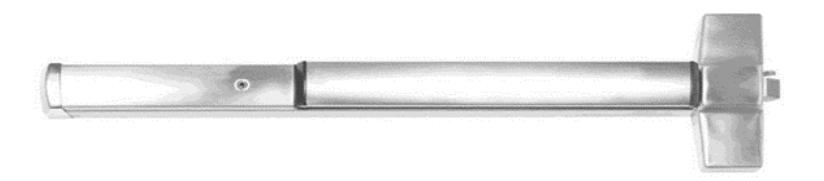
All exit devices manufactured by Corbin Russwin undergo rigorous testing, both in the lab and field, with testing procedures that go beyond industry standards. Abuse and cycle tests prove time and again the durability of the entire ED5000 series,and backed by a 5-year warranty.
ASSA ABLOY is committed to providing products and services that are environmentally sound throughout the entire production process and the product lifecycle. Our unconditional aim is to make sustainability a central part of our business philosophy and culture, but even more important is the job of integrating sustainability into our business strategy. The employment of EPDs will help architects, designers and LEED-APs select environmentally preferable door openings.
ASSA ABLOY will continue our efforts to protect the environment and health of our customers/end users and will utilize the EPD as one means to document those efforts.
Corbin Russwin
Door Hardware

According to and ISO 21930:2017 ISO 14025, EN 15804,
|
EPD PROGRAM AND PROGRAM OPERATOR
NAME, ADDRESS, LOGO, AND WEBSITE |
UL Environment 333
Pfingsten Road Northbrook, IL 60611 |
https://www.ul.com/
https://spot.ul.com |
||||
|
GENERAL PROGRAM INSTRUCTIONS
AND VERSION NUMBER |
General Program Instructions v.2.5 March 2020 | |||||
| MANUFACTURER NAME AND ADDRESS |
ASSA ABLOY
110 Sargent Drive, New Haven, CT 06511 |
|||||
| DECLARATION NUMBER | 4789198858.104.1 | |||||
|
DECLARED PRODUCT &
FUNCTIONAL UNIT OR DECLARED UNIT |
Corbin Russwin ED5000 Mechanical Exit Device
Functional Unit = 1 piece over 75 year building lifetime |
|||||
| REFERENCE PCR AND VERSION NUMBER |
UL Environment Part B: Builders Hardware EPD Requirements, Version 1.0,
November 2019. |
|||||
| DESCRIPTION OF PRODUCT APPLICATION/USE | ASSA ABLOY products are primarily used in commercial, residential, and educational settings. | |||||
| PRODUCT RSL DESCRIPTION (IF APPL.) | 25 Years | |||||
| MARKETS OF APPLICABILITY | Global | |||||
| DATE OF ISSUE | October 1, 2020 | |||||
| PERIOD OF VALIDITY | 5 Year | |||||
| EPD TYPE | Product-Specific | |||||
| RANGE OF DATASET VARIABILITY | N/A | |||||
| EPD SCOPE | Cradle to Grave | |||||
| YEAR(S) OF REPORTED PRIMARY DATA | 2018 | |||||
| LCA SOFTWARE & VERSION NUMBER | GaBi 8.7 | |||||
| LCI DATABASE(S) & VERSION NUMBER | GaBi Sphera database, Service Pack 35 | |||||
| LCIA METHODOLOGY & VERSION NUMBER | TRACI 2.1; CML 4.1 | |||||
| UL Environment | |
|---|---|
| PCR Review Panel | |
| This PCR review was conducted by: | epd@ulenvironment.com |
|
This declaration was independently verified in accordance with ISO 14025: 2006.
□ INTERNAL ☐ EXTERNAL |
|
| Grant R. Martin, UL Environment | |
|
This life cycle assessment was independently verified in accordance with ISO
14044 and the reference PCR by: |
|
| Thomas P. Gloria, Industrial Ecology Consultants |
LIMITATIONS
Exclusions: EPDs do not indicate that any environmental or social performance benchmarks are met, and there may be impacts that they do not encompass. LCAs do not typically address the site-specific environmental impacts of raw material extraction, nor are they meant to assess human health toxicity. EPDs can complement but cannot replace tools and certifications that are designed to address these impacts and/or set performance thresholds – e.g. Type 1 certifications, health assessments and declarations, environmental impact assessments, etc.
Accuracy of Results: EPDs regularly rely on estimations of impacts; the level of accuracy in estimation of effect differs for any particular product line and reported impact.
Comparability: EPDs from different programs may not be comparable. Full conformance with a PCR allows EPD comparability only when all stages of a life cycle have been considered. However, variations and deviations are possible". Example of variations: Different LCA software and background LCI datasets may lead to differences results for upstream or downstream of the life cycle stages declared.

Corbin Russwin
Door Hardware

According to and ISO 21930:2017 ISO 14025, EN 15804,
General Information
Description of Company/Organization
Products are manufactured by ASSA ABLOY. The manufacturing facility is located in Berlin, CT and has an ISO 14001 certified environmental management system in place.
ASSA ABLOY remains committed to the principles of the UN Global Compact in the areas of human rights, labor, the environment and anti-corruption.
Product Description
Corbin Russwin ED5000 series exit devices are available in multiple locking arrangements including Rim, Mortise Surface Vertical Rod, and Concealed Vertical rod in both panic and fire rated versions.
The ED5000 rim device is available is available in 3 standard lengths, with multiple mechanical and electrified options for both exit and trim.
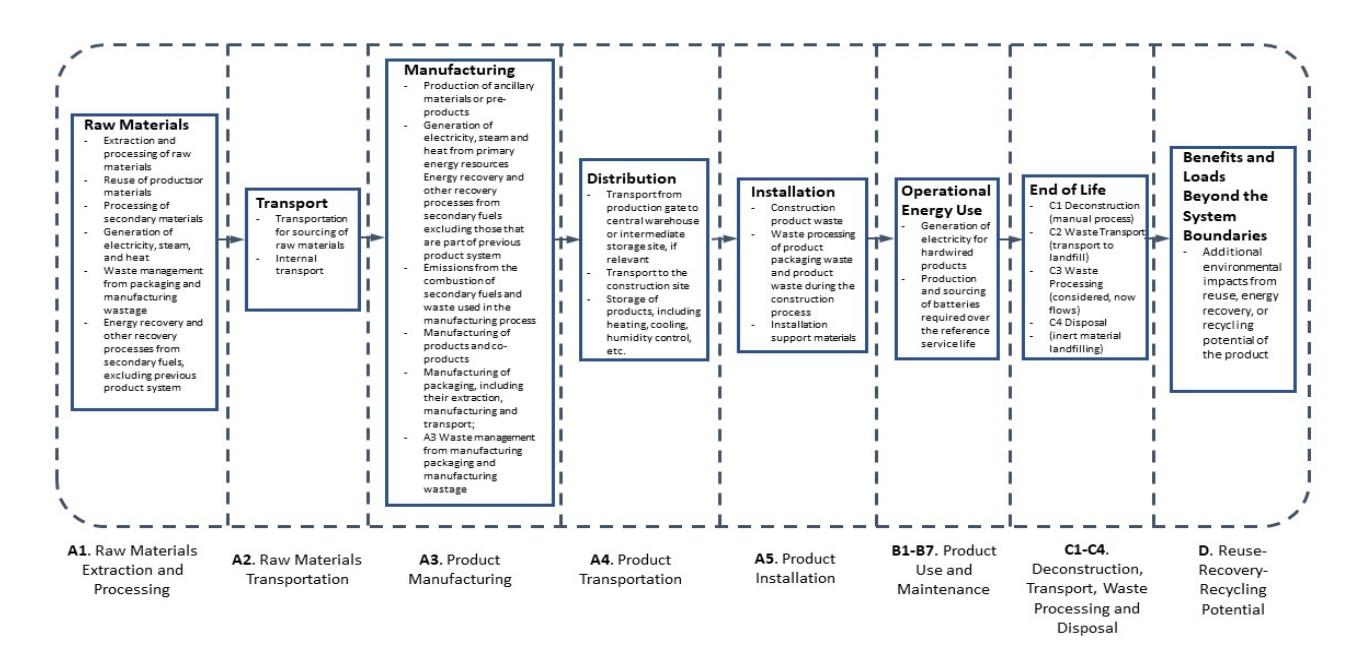
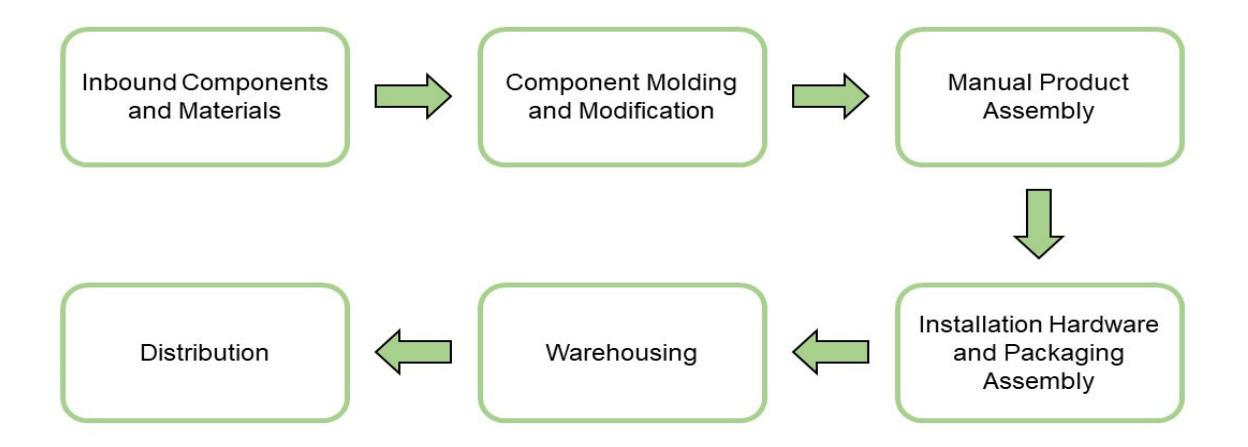
Flow Diagram

Corbin Russwin
Door Hardware
According to and ISO 21930:2017 ISO 14025, EN 15804,
Manufacturer Specific EPD
This product-specific EPD was developed based on the cradle-to-grave (modules A1-D) Life Cycle Assessment. The EPD accounts for raw material extraction and processing, transport, product manufacturing, distribution, installation, use, maintenance, disposal, and potential benefits and loads following the end of life disposal. Manufacturing data were gathered directly from company personnel. When updated company-specific data were not available the ratio of production units, between the 2018 calendar year and 2015 baseline year, was used as a proxy. For any product group EPDs, an impact assessment was completed for each product and the highest impacts were reported as conservative representations of the product group. Product grouping was considered appropriate if the individual product impacts differed by no more than ±10% in any impact category.
Application
In compliance with security regulations against fire in public places (art. C045) designed to equip:
- Emergency exit doors
- Frequently used communicating doors
- Types of doors
- Metal or wooden doors
- Metal, aluminum or PVC framed doors with a narrow stile
- Single or double leaf doors (separate or with rebated edge)
- Designed for all types of public, particularly children, the elderly and the disabled.
Material Composition
| Material | Percentage in mass (%) |
|---|---|
| Brass | 2.48% |
| Stainless Steel | 0.01% |
| Steel | 97.39% |
| Aluminum | 0.00% |
| Electronics/Mechanics | 0.00% |
| Plastics | 0.04% |
| Other | 0.07% |
| Total | 100.00% |
Technical Data
For the declared product, the following technical data in the delivery status must be provided with reference to the test standard:
| Technical Data | |
|---|---|
| Length (Rail Size) | Rails are available in 3 sizes, from the factory and can |
| be cut to fit on installation | |
| - Standard 36" (914 mm) bar fits 30" – 36" (762 mm – | |
| 914 mm) door | |
| - Optional: 24" (610 mm) bar fits 24" (610 mm) door | |
| - Optional: 48" (1219 mm) bar fits 36" – 48" (914 mm – | |
| 1219 mm) door | |
| Width (Door Stile) | Minimum width 4-1/2" (114 mm) |
| Height (Projection) | Pushbar Neutral – 3-1/4" (83 mm) |
| Pushbar Depressed – 2-3/4" (70 mm) | |
| Installation |
Device Centerline from 41" (1041 mm). For Standard
Applications Finished Floor |
| Door (Thickness) |
Minimum 1-3/4" (44mm) thickness. 1-3/4" to 2-1/4"
optional. |

Corbin Russwin
Door Hardware

According to and ISO 21930:2017 ISO 14025, EN 15804,
Placing on the Market / Application Rules
The standards that can be applied for the ED5000 Mechanical Exit Device are:
- ANSI/BHMA A156.3, Type 28, Grade 1 American Standard for Exit Devices
- ANSI/BHMA A117.1 Accessibility Code
- UL10C Fire Listed
- UL305 Panic Listed
- California Health and Safety Code Section 13144.1
Properties of Declared Product as Shipped
Products are delivered as a complete unit, inclusive of all installation materials and instructions. Delivered in a box size 40" x 10.25" x 6" (1016 x 260 x 152mm). Exit trim is packaged separately, delivered in a box size 18" x 11.25" x 5" (457 x 286 x 127mm).
Delivery Status
Exit device delivered as a complete unit, inclusive of exit device, strike and fasteners.

Corbin Russwin
Door Hardware

According to ISO 14025, EN 15804, and ISO 21930:2017
Methological Framework
Functional Unit
The declaration refers to the functional unit of 1 unit (or piece) of ED5000 Mechanical Exit Device, as specified in the Builders Hardware PCR.
| Name | Value | Unit |
|---|---|---|
| Declared unit | 1 | 1 piece of exit device |
| Mass | 64.21 | kg |
| Conversion factor to 1 kg | 0.016 | - |
System Boundary
This is a cradle to grave Environmental Product Declaration. The following life cycle phases were considered:
| Pro | duct St | age |
truction
ss Stage |
Use Stage | Use Stage End of Life Stage* | ge* |
Benefits and
Loads Beyond the System Boundaries |
|||||||||
|---|---|---|---|---|---|---|---|---|---|---|---|---|---|---|---|---|
| Raw material supply | Transport | Manufacturing | Transport from gate to the site |
Construction/
installation process |
Use | Maintenance | Repair | Replacement | Refurbishment | Operational energy use | Operational water use |
Deconstruction
/demolition |
Transport | Waste processing | Disposal |
Reuse-Recovery-
Recycling potential |
| A1 | A2 | A3 | A4 | A5 | B1 | C4 | D | |||||||||
| Х | Х | Х | Х | Х | Х | Х | Χ | Х | Х | Χ | Х | Х | Χ | Х | Х | Х |
Description of the System Boundary Stages Corresponding to the PCR (X = Included; MND = Module Not Declared)
Product Maintenance
This product requires no maintenance over its reference service life.
Reference Service Life
The reference service life of 25 years is based on a typical installation of a Corbin Russwin ED5000 Mechanical Exit Device, operated when the facilities are to be closed or opened. If operations per day exceeds that typical wear the locks are exposed to the life time is limited to 500,000 cycles in accordance with ANSI/BHMA A156.3. Influences on ageing when applied in accordance with the rules of technology.
Allocation
Allocation was determined on a per unit basis.

* This includes provision of all materials, products and energy, packaging processing and its transport, as well as waste processing up to the end-of waste state or disposal of final residues.
Corbin Russwin
Door Hardware
According to and ISO 21930:2017 ISO 14025, EN 15804,
Cut-off Criteria
Processes whose total contribution to the final result, with respect to their mass and in relation to all considered impact categories, is less than 1% can be neglected. The sum of the neglected processes may not exceed 5% by mass of the considered impact categories. For that a documented assumption is admissible.
For Hazardous Substances the following requirements apply:
- The Life Cycle Inventory (LCI) of hazardous substances will be included, if the inventory is available.
- If the LCI for a hazardous substance is not available, the substance will appear as an input in the LCI of the product, if its mass represents more than 0.1% of the product composition.
- If the LCI of a hazardous substance is approximated by modeling another substance, documentation will be provided.
This EPD is in compliance with the cut-off criteria. No processes were neglected or excluded. Capital items for the production processes (machine, buildings, etc.) were not taken into consideration.
Data Sources
Primary data were collected for every process in the product system under the control of ASSA ABLOY Corporate. Secondary data from the GaBi Sphera database were utilized. These data were evaluated and have temporal, geographic, and technical coverage appropriate to the scope of the Builder's Hardware product category.
Data Quality
The data sources used are complete and representative of North America in terms of the geographic and technological coverage and are a recent vintage (i.e. less than ten years old). The data used for primary data are based on direct information sources of the manufacturer. Secondary data sets were used for raw materials extraction and processing, end of life, transportation, and energy production flows. Wherever secondary data is used, the study adopts critically reviewed data for consistency, precision, and reproducibility to limit uncertainty.
Period Under Review
The period under review is the full calendar year of 2018.
Comparability and Benchmarking
A comparison or an evaluation of EPD data is only possible if all data sets to be compared were created according to EN 15804 and the building context, respectively the product-specific characteristics of performance, are taken into account. Environmental delarations from different programs may not be comparable. Full conformance with the PCR for North American Builders Hardware products allows EPD comparability only when all stages of a Builders Hardware product's life cycle have been considered. However, variations and deviations are possible.
Estimates and Assumptions
End of Life
In the End of Life phase, metal materials were assumed to have an 85% recycling rate while all other materials were assumed to have a 0% recycling rate, in accordance with the Builder's Hardware PCR.

Corbin Russwin
Door Hardware

According to and ISO 21930:2017 ISO 14025, EN 15804,
Additional Environmental Information
Background data
For life cycle modeling of the considered products, the GaBi 8 Software System for Life Cycle Engineering, developed by Sphera, is used. The GaBi-database contains consistent and documented datasets which are documented in the online GaBidocumentation. To ensure comparability of results in the LCA, the basic data of GaBi database were used for energy, transportation and auxiliary materials.
Manufacturing
The primary manufacturing processes are made by Tier 1 suppliers in Mexico and the final manufacturing processes occur in Berlin, CT. The components come from processes like stamped steel, turning, and aluminum extrusion.
Packaging
All packaging is fully recyclable. The packaging material is composed by cardboard (app. 100%).
| Material | Quantity (% By Weight) |
|---|---|
| Cardboard | 100% |
| Other | 0% |
| Total | 100% |

Corbin Russwin
Door Hardware
ASSA ABLOY
CERTIFIED ENVIRONMENTAL PRODUCT DECLARATION ILL COMPETE
According to ISO 14025, EN 15804, and ISO 21930:2017
Transformation
| Transport to Building Site (A4) | |||||||||
|---|---|---|---|---|---|---|---|---|---|
| Name | Value | Unit | |||||||
| Liters of fuel | 38 | l/100km | |||||||
| Transport distance | 500 | km | |||||||
| Capacity utilization (including empty runs) | 90 | % | |||||||
| Gross density of products transported | - | kg/m³ | |||||||
| Capacity utilization volume factor | 1.00 | - | |||||||
Product Installation
Corbin Russwin ED5000 Mechanical Exit Device are distributed through and installed by trained installation technicians, such as locksmiths, carpenters etc. adhering to local/national standards and requirements.
| Installation into the building (A5) | ||||||||
|---|---|---|---|---|---|---|---|---|
| Name | Value | Unit | ||||||
| Auxiliary materials | - | kg | ||||||
| Water consumption | - | m 3 | ||||||
| Other resources | - | kg | ||||||
| Electricity consumption | 0.01 | kWh | ||||||
| Other energy carriers | - | MJ | ||||||
| Waste materials at construction site | 0.00 | kg | ||||||
| Output substance (recycle) | 0.00 | kg | ||||||
| Output substance (landfill) | 0.00 | kg | ||||||
| Output substance (incineration) | 0.00 | kg | ||||||
| Direct emissions to ambient air*, soil, and water | 0.00 | kg CO 2 | ||||||
| Reference Service Life | ||||||||
|---|---|---|---|---|---|---|---|---|
| Name | Value | Unit | ||||||
| Reference Service Life | 25 | years | ||||||
| Estimated Building Service Life | 75 | years | ||||||
| Number of Replacements | 2 | number | ||||||
Product Use
No cleaning or annual maintenance is required.
| Operational Energy Use (B6) | |||||||||
|---|---|---|---|---|---|---|---|---|---|
| Name | Value | Unit | |||||||
| Water consumption (from tap, to sewer) | - | ||||||||
| Electricity consumption | 0.00 | kWh | |||||||
| Other energy carriers | - | MJ | |||||||
| Equipment output | - | kW | |||||||
| Direct emissions to ambient air, soil, and water | - | kg | |||||||

* CO2 emissions to air from disposal of packaging
Corbin Russwin
Door Hardware

According to and ISO 21930:2017 ISO 14025, EN 15804,
Disposal
The product can be mechanically dissembled to separate the different materials. 100% of the materials used are recyclable. The remainder of components are disposed of according to standard municipal solid waste deposition.
| End of life (C1-C4) | ||||||||||
|---|---|---|---|---|---|---|---|---|---|---|
| Name | Value | Unit | ||||||||
| Collected separately | 54.56 | kg | ||||||||
| Collected as mixed construction waste | 9.66 | kg | ||||||||
| Reuse | 0.00 | kg | ||||||||
| Recycling | 54.56 | kg | ||||||||
| Energy recovery | 0.00 | kg | ||||||||
| Landfilling | 9.66 | kg | ||||||||
Re-use Phase
The product is possible to re-use during the reference service life and be moved to one door to another. The majority, by weight, of components are steel and brass which can be recycled. The plastic components can be used for energy recovery in an incineration process. The lock can either be sent back to Corbin Russwin for recycling or to a professional recycling service provider.
| Re-Use, recovery, And/Or Recycling Potential (D) | ||
|---|---|---|
| Name | Value | Unit |
|
Net energy benefit from energy recovery from waste
treatment declared as exported energy in C3 (R>0.6) |
0.00 | MJ |
|
Net energy benefit from thermal energy due to treatment of
waste declared as exported energy in C4 (R<0.6) |
0.00 | MJ |
|
Net energy benefit from material flow declared in C3 for
energy recovery |
0.00 | MJ |
| Process and conversion efficiencies | ||
|
Further assumptions for scenario development (e.g. further
processing technologies, assumptions on correction factors); |

Corbin Russwin
Door Hardware

According to ISO 14025, EN 15804, and ISO 21930:2017
LCA Results
Results shown below were calculated using TRACI 2.1 Methodology.
| TRACI 2.1 Ir | npact Assessment | ||||||||||
|---|---|---|---|---|---|---|---|---|---|---|---|
| Parameter | Parameter | Unit | A1-A3 | A4 | A5 | B4 | В6 | C1 | C2 | C3 | C4 |
| GWP | Global warming potential | kg CO 2 -Eq. | 1.3E+02 | 4.8E+00 | 1.6E-04 | 1.2E+02 | 0.0E+00 | 3.0E-01 | 1.6E+00 | 2.1E+00 | -8.1E+01 |
| ODP |
Depletion potential of the
stratospheric ozone layer |
kg CFC-11
Eq. |
1.0E-09 | 1.8E-10 | 1.5E-16 | 1.1E-06 | 0.0E+00 | 1.1E-11 | 5.4E-11 | -9.5E-15 | 5.7E-07 |
| AP Air | Acidification potential for air emissions | kg SO 2 -Eq. | 5.1E-01 | 2.9E-02 | 9.1E-07 | 8.1E-01 | 0.0E+00 | 1.8E-03 | 9.7E-03 | 9.6E-03 | -1.6E-01 |
| EP | Eutrophication potential | kg N-Eq. | 2.7E-02 | 1.6E-03 | 1.5E-07 | 5.3E-02 | 0.0E+00 | 9.9E-05 | 4.6E-04 | 3.6E-03 | -6.5E-03 |
| SP | Smog formation potential | kg O 3 -Eq. | 7.6E+00 | 7.9E-01 | 8.5E-06 | 1.3E+01 | 0.0E+00 | 4.9E-02 | 2.3E-01 | 3.8E-02 | -2.3E+00 |
| FFD | Fossil Fuel Depletion | MJ-surplus | 3.9E+01 | 8.4E+00 | 5.3E-05 | 1.3E+02 | 0.0E+00 | 5.3E-01 | 2.6E+00 | 3.2E-01 | 1.3E+01 |
* All use phase stages have been considered and only those with non-zero values have been reported
Results shown below were calculated using CML 2001 - April 2013 Methodology.
| CML 4.1 Impact Assessment | |||||||||||
|---|---|---|---|---|---|---|---|---|---|---|---|
| Parameter Parameter | Unit | A1-A3 | A4 | A5 | B4 | В6 | C1 | C2 | C3 | C4 | |
| GWP | Global warming potential | kg CO 2 -Eq. | 1.3E+02 | 4.8E+00 | 1.6E-04 | 1.2E+02 | 0.0E+00 | 3.0E-01 | 1.6E+00 | 2.1E+00 | -8.1E+01 |
| ODP |
Depletion potential of the
stratospheric ozone layer |
kg CFC-11 Eq. | 9.8E-10 | 1.8E-10 | 1.5E-16 | 9.0E-07 | 0.0E+00 | 1.1E-11 | 5.4E-11 | 8.5E-16 | 4.5E-07 |
| AP Air | Acidification potential for air emissions | kg SO 2 -Eq. | 5.1E-01 | 2.4E-02 | 6.1E-07 | 7.7E-01 | 0.0E+00 | 1.5E-03 | 8.4E-03 | 3.7E-03 | -1.6E-01 |
| EP | Eutrophication potential | kg(PO 4 ) 3 -Eq. | 4.4E-02 | 4.2E-03 | 2.2E-07 | 8.3E-02 | 0.0E+00 | 2.6E-04 | 1.2E-03 | 4.0E-03 | -1.2E-02 |
| POCP |
Formation potential of
tropospheric ozone photochemical oxidants |
kg ethane-Eq. | 6.8E-02 | 2.8E-03 | 1.3E-07 | 7.2E-02 | 0.0E+00 | 1.7E-04 | 9.8E-04 | 9.6E-04 | -3.7E-02 |
| ADPE |
Abiotic depletion potential for non-
fossil resources |
kg Sb-Eq. | 9.2E-04 | 2.0E-09 | 3.0E-11 | 1.4E-03 | 0.0E+00 | 1.2E-10 | 2.7E-09 | 1.0E-07 | -2.3E-04 |
| ADPF | Abiotic depletion potential for fossil resources | MJ | 1.5E+03 | 6.0E+01 | 4.7E-04 | 1.6E+03 | 0.0E+00 | 3.8E+00 | 2.0E+01 | 2.5E+00 | -7.8E+02 |
* All use phase stages have been considered and only those with non-zero values have been reported
Results below contain the resource use throughout the life cycle of the product.
| Resource Use | |||||||||||
|---|---|---|---|---|---|---|---|---|---|---|---|
| Parameter | Parameter | Unit | A1-A3 | A4 | A5 | B4 | В6 | C1 | C2 | C3 | C4 |
| RPR E | Renewable primary energy as energy carrier | MJ | 6.1E+01 | 0.0E+00 | 7.0E-05 | 2.3E+02 | 0.0E+00 | 0.0E+00 | 0.0E+00 | 2.4E-01 | 5.2E+01 |
|
Renewable primary energy
resources as material utilization |
MJ | 1.7E-02 | 0.0E+00 | 0.0E+00 | 3.3E-02 | 0.0E+00 | 0.0E+00 | 0.0E+00 | 0.0E+00 | 0.0E+00 | |
| Nonrenewable primary energy as energy carrier | MJ | 1.6E+03 | 6.1E+01 | 4.9E-04 | 1.8E+03 | 0.0E+00 | 3.8E+00 | 2.1E+01 | 2.7E+00 | -7.5E+02 | |
| Nonrenewable primary energy as material utilization | MJ | 8.2E-01 | 0.0E+00 | 0.0E+00 | 1.6E+00 | 0.0E+00 | 0.0E+00 | 0.0E+00 | 0.0E+00 | 0.0E+00 | |
| SM | Use of secondary material | kg | 0.0E+00 | 0.0E+00 | 0.0E+00 | 0.0E+00 | 0.0E+00 | 0.0E+00 | 0.0E+00 | 0.0E+00 | 0.0E+00 |
| RSF | Use of renewable secondary fuels | MJ | 0.0E+00 | 0.0E+00 | 0.0E+00 | 0.0E+00 | 0.0E+00 | 0.0E+00 | 0.0E+00 | 0.0E+00 | 0.0E+00 |
| NRSF | Use of nonrenewable secondary fuels | MJ | 0.0E+00 | 0.0E+00 | 0.0E+00 | 0.0E+00 | 0.0E+00 | 0.0E+00 | 0.0E+00 | 0.0E+00 | 0.0E+00 |
| RE | Energy recovered from disposed waste | MJ | 0.0E+00 | 0.0E+00 | 0.0E+00 | 0.0E+00 | 0.0E+00 | 0.0E+00 | 0.0E+00 | 0.0E+00 | 0.0E+00 |
| FW | Use of net fresh water | m 3 | 6.1E-01 | 0.0E+00 | 2.3E-06 | 1.4E+00 | 0.0E+00 | 0.0E+00 | 0.0E+00 | 3.3E-03 | 1.0E-01 |
* All use phase stages have been considered and only those with non-zero values have been reported

Door Hardware
ASSA ABLOY Corbin Russwin
According to ISO 14025, EN 15804, and ISO 21930:2017
Results below contain the output flows and wastes throughout the life cycle of the product.
| Output Flow | Output Flows and Waste Categories | ||||||||||
|---|---|---|---|---|---|---|---|---|---|---|---|
| Parameter | Parameter Parameter | A1-A3 | A4 | A5 | B4 | В6 | C1 | C2 | C3 | C4 | |
| HWD | Hazardous waste disposed | kg | 1.5E-04 | 0.0E+00 | 1.2E-12 | 1.9E-04 | 0.0E+00 | 0.0E+00 | 0.0E+00 | 1.0E-08 | -5.3E-05 |
| NHWD |
Non-hazardous waste
disposed |
kg | 2.2E+00 | 0.0E+00 | 2.1E-04 | 2.7E+01 | 0.0E+00 | 0.0E+00 | 0.0E+00 | 2.8E+00 | 8.5E+00 |
| HLRW | High-level radioactive waste | kg or m 3 | 1.4E-02 | 0.0E+00 | 1.1E-08 | 2.9E-02 | 0.0E+00 | 0.0E+00 | 0.0E+00 | 4.4E-05 | 4.5E-06 |
| ILLRW | Intermediate- and low-level radioactive waste | kg or m 3 | 0.0E+00 | 0.0E+00 | 0.0E+00 | 0.0E+00 | 0.0E+00 | 0.0E+00 | 0.0E+00 | 0.0E+00 | 0.0E+00 |
| CRU | Components for re-use | kg | 0.0E+00 | 0.0E+00 | 0.0E+00 | 0.0E+00 | 0.0E+00 | 0.0E+00 | 0.0E+00 | 0.0E+00 | 0.0E+00 |
| MR | Materials for recycling | kg | 0.0E+00 | 0.0E+00 | 6.5E-04 | 1.1E+02 | 0.0E+00 | 0.0E+00 | 0.0E+00 | 5.5E+01 | 0.0E+00 |
| MER | Materials for energy recovery | kg | 0.0E+00 | 0.0E+00 | 4.3E-05 | 8.6E-05 | 0.0E+00 | 0.0E+00 | 0.0E+00 | 0.0E+00 | 0.0E+00 |
| EE | Recovered energy exported from system | MJ | 0.0E+00 | 0.0E+00 | 0.0E+00 | 0.0E+00 | 0.0E+00 | 0.0E+00 | 0.0E+00 | 0.0E+00 | 0.0E+00 |
* All use phase stages have been considered and only those with non-zero values have been reported
Results below contain direct greenhouse gas emissions and removals throughout the life cycle of the product.
| Resource Use | |||||||||||
|---|---|---|---|---|---|---|---|---|---|---|---|
| Parameter | Parameter | Unit | A1-A3 | A4 | A5 | B4 | В6 | C1 | C2 | C3 | C4 |
| BCRP | Biogenic Carbon Removal from Product | kg CO₂ | 0.00E+00 | 0.00E+00 | 0.00E+00 | 0.00E+00 | 0.00E+00 | 0.00E+00 | 0.00E+00 | 0.00E+00 | 0.00E+00 |
| BCEP |
Biogenic Carbon Emissions
from Product |
kg CO 2 | 0.00E+00 | 0.00E+00 | 0.00E+00 | 0.00E+00 | 0.00E+00 | 0.00E+00 | 0.00E+00 | 0.00E+00 | 0.00E+00 |
| BCRK | Biogenic Carbon Removal from Packaging | kg CO₂ | 2.24E-04 | 0.00E+00 | 0.00E+00 | 4.48E-04 | 0.00E+00 | 0.00E+00 | 0.00E+00 | 0.00E+00 | 0.00E+00 |
| BCEK | Biogenic Carbon Emissions from Packaging | kg CO₂ | 0.00E+00 | 0.00E+00 | 2.24E-04 | 4.48E-04 | 0.00E+00 | 0.00E+00 | 0.00E+00 | 0.00E+00 | 0.00E+00 |
| BCEW |
Biogenic Carbon Emissions
from Combustion of Waste from Renewable Sources Used in Production Process |
kg CO₂ | 0.00E+00 | 0.00E+00 | 0.00E+00 | 0.00E+00 | 0.00E+00 | 0.00E+00 | 0.00E+00 | 0.00E+00 | 0.00E+00 |
| CCE | Calcination Carbon Emissions | kg CO 2 | 0.00E+00 | 0.00E+00 | 0.00E+00 | 0.00E+00 | 0.00E+00 | 0.00E+00 | 0.00E+00 | 0.00E+00 | 0.00E+00 |
| CCR | Carbonation Carbon Removal | kg CO 2 | 0.00E+00 | 0.00E+00 | 0.00E+00 | 0.00E+00 | 0.00E+00 | 0.00E+00 | 0.00E+00 | 0.00E+00 | 0.00E+00 |
| CWNR |
Carbon Emissions from
Combustion of Waste from Non-renewable Sources Used in Production Process |
kg CO₂ | 0.00E+00 | 0.00E+00 | 0.00E+00 | 0.00E+00 | 0.00E+00 | 0.00E+00 | 0.00E+00 | 0.00E+00 | 0.00E+00 |
* All use phase stages have been considered and only those with non-zero values have been reported

Corbin Russwin
Door Hardware

According to and ISO 21930:2017 ISO 14025, EN 15804,
LCA Interpretation
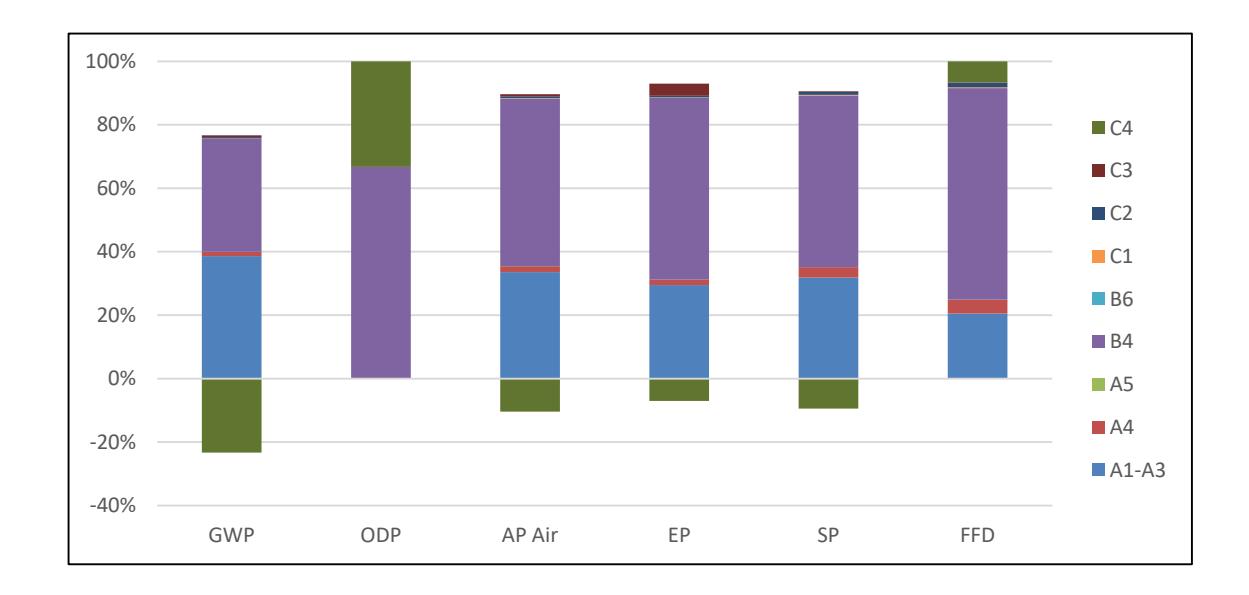
The production life cycle stage (A1-A3) dominates the impacts across all impact categories. This is due to the upstream production of materials used in the product, along with electricity use in the manufacturing of the product. The disposal stage (C4) contributes negative impacts in many of the impact categories due to the product being mainly composed of steel. With two replacements required over a life-span of a building, the replacement stage (B4) dominates from duplicating these stages.

Corbin Russwin
Door Hardware

According to and ISO 21930:2017 ISO 14025, EN 15804,
Additional Environmental Information
Environmental and Health During Manufacturing
ASSA ABLOY is committed to producing and distributing door opening solutions with minimal environmental impact, where health & safety is the primary focus for all employees and associates.
- Environmental operations, GHG, energy, water, waste, VOC, surface treatment and H&S are being routinely monitored. Inspections, audits, and reviews are conducted periodically to ensure that applicable standards are met and environment management program effectiveness is evaluated.
- Code of Conduct covers human rights, labor practices and decent work. Management of ASSA ABLOY is aware of their environmental roles and responsibilities, providing appropriate training, supporting accountability and recognizing outstanding performance.
- Any waste metals during machining are separated and recycled. The waste from the water-based painting process is delivered to waste treatment plant.
- The factories in Berlin, CT have certification of Environmental Management to ISO 14001:2004 and Occupational Health and Safety to OHSAS 18001:2007.
Environmental and Health During Installation
There is no harmful emissive potential. No damage to health or impairment is expected under normal use corresponding to the intended use of the product.
Extraordinary Effects
Fire
Suitable for use in fire and smoke doors: (listed by Underwriters Laboratories)
Water
Contain no substances that have any impact on water in case of flood. Electric operation of the device will be influenced negatively.
Mechanical Destruction
No danger to the environment can be anticipated during mechanical destruction.
Delayed Emissions
Global warming potential is calculated using the TRACI 2.1 and CML 4.1 impact assessment methodologies. Delayed emissions are not considered.
Environmanetal Activities and Cerifications
ASSA ABLOY works hard to minimize the environmental impacts of its business activities through various corporate-wide sustainability initiatives. To learn more, please visit: https://www.assaabloy.com/sv/com/sustainability/sustainability-report/
Many ASSA ABLOY Group Brands now offer a free Product End-of-Life Recycling program that accepts each brand's products that have reached the end of their life cycle and are beyond the product's warranty period, disposing them in an environmentally-responsible manner.
Further Information
Corbin Russwin 225 Episcopal Rd Berlin, CT 06037 USA

Corbin Russwin
Door Hardware

According to and ISO 21930:2017 ISO 14025, EN 15804,
References
| - | PCR Part A |
UL Environment: Product Category Rules for Building-Related Products and Services in North America,
Part A: Life Cycle Assessment Calculation Rules and Report Requirements, v.3.2, December 2018. |
| - | PCR Part B |
UL Environment: Product Category Rules Part B: Requirements on the Environmental Product
Declaration for Builders Hardware, v.1.0, November 2019. |
|
-
- |
GaBi 8.7
ISO 14025 |
thinkstep.one. GaBi Life Cycle Assessment version 8.7 (software).
ISO 14025:2011-10, Environmental labels and declarations — Type III environmental declarations — Principles and procedures. |
| - | ISO 14040 | ISO 14040:2009-11, Environmental management — Life cycle assessment — Principles and framework. |
| - | ISO 14044 |
ISO 14044:2006-10, Environmental management — Life cycle assessment — Requirements and
guidelines. |
| - | EN 15804 |
EN 15804:2012-04: Sustainability of construction works — Environmental Product Declarations — Core
rules for the product category of construction product |
| - | ULE 2013 | UL Environment, General Program Instructions, 2013. |
| - | ADAAG-1998 | Americans with Disabilities Act Accessibility Guidelines |
| - | ANSI A117.1 | Accessible and Usable Buildings and Facilities |
| - | CBC, Title 24 | Barrier Free guidelines |
| - | ASTM E90 | Standard Test Method for Laboratory Measurement of Airborne Sound Transmission Loss of Building |
| - | ASTM E283 | Standard Test Method for Determining Rate of Air Leakage Through Exterior Windows, Curtain Walls, |
| - | BHMA A156.21 | Thresholds |
| - | UL 10(b) | Gasketing Material for Fire Doors |
| - | UL 10(c) | Positive Pressure Gasketing Material for Fire Doors |
| - | UL 2818 |
GREENGUARD Certification Program for Chemical Emissions for Building Materials, Finishes and
Furnishings |
| - | ISO 21930: 2017 |
ISO 21930:2017, Sustainability in buildings and civil engineering works - Core rules for environmental
product declarations of construction products and services. |
| - |
Characterization
Method |
IPPC. 2014. Climate Change 2013. The Physical Science Basis. Cambridge University Press.
(http://www.ipcc.ch/report/ar5/wg1/). |
| - |
Characterization
Method |
Hauschild M.Z., & Wenzel H. Environmental Assessment of Products. Springer, US, Vol. 2, 1998. |
| - |
Characterization
Method |
Heijungs R., Guinée J.B., Huppes G., Lankreijer R.M., Udo de Haes H.A., Wegener Sleeswijk A.
Environmental Life Cycle Assessment of Products: Guide and Backgrounds. CML. Leiden University, Leiden, 1992. |
| - |
Characterization
Method |
Jenkin M.E., & Hayman G.D. Photochemical ozone creation potentials for oxygenated volatile organic
compounds: sensitivity to variations in kinetic and mechanistic parameters. Atmospheric Environment. 1999, 33 (8) pp. 1275-1293. |
| - |
Characterization
Method |
WMO. 1999. Scientific Assessment of Ozone Depletion: 1998, World Meteorological Organization Global
Ozone Research and Monitoring Project - Report No. 44, WMO, Geneva. |
| - |
Characterization
Method |
Standard Method for the Testing and Evaluation of Volatile Organic Chemical Emissions from Indoor
Sources using Environmental Chambers- version 1.2, January 2017. |

Corbin Russwin
Door Hardware

According to and ISO 21930:2017 ISO 14025, EN 15804,
Contact Information
Study Commisioner

ASSA ABLOY Amy Musanti Director - Sustainable Building Solutions 110 Sargent Drive New Haven, CT 06511 amy.musanti@assaabloy.com 203-603-5919 www.assaabloydss.com/sustainability
LCA Practitioner

Sustainable Solutions Corporation 155 Railroad Plaza, Suite 203 Royersford, PA 19468 USA (+1) 610 569-1047 info@sustainablesolutionscorporation.com www.sustainablesolutionscorporation.com